
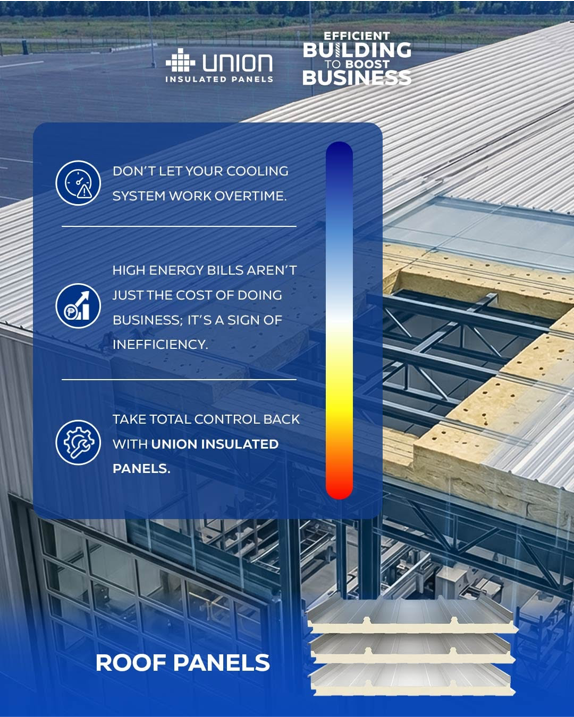
One faulty seam is all it takes to turn an expensive cold storage facility or a modern, air-conditioned home into an energy-draining nightmare. In the Philippines, where the punishing tropical heat and soaring electricity rates constantly test your budget, traditional concrete and standard roofing materials simply cannot keep up. Insulated sandwich panels offer the ultimate solution for climate-controlled spaces, but a massive trap awaits: a single gap in execution destroys your entire investment.
Key Insight: Insulated panels do not work through thickness alone; they rely entirely on thermal envelope continuity. This requires precision engineering in the alignment, interlocking joints, and vapor seals to help dictate whether your structure maintains its thermal efficiency or succumbs to costly cooling leaks and internal moisture damage.
The Invisible Threat of Thermal Bridging
Many builders treat insulated panels as basic wall or roofing sheets that can be easily fitted together on-site. However, true thermal isolation requires airtight execution. The core material—whether Polyurethane (PU), Polyisocyanurate (PIR), or Rockwool—must form a continuous barrier against the outside heat.
When installation lacks technical precision, thermal bridging occurs. Heat takes the path of least resistance, bleeding through microscopic gaps in the panel joints or poorly calculated metal-to-metal contact points. This minor oversight forces your cooling systems to work twice as hard to maintain stable indoor temperatures, causing your electricity consumption to skyrocket, while drastically shortening the lifespan of your air conditioning units.
Combating Humidity and Internal Condensation
In a high-humidity environment like the Philippines, precision engineering is your only defense against moisture infiltration. When hot, humid outdoor air meets a cool, insulated indoor surface through a compromised panel joint, condensation forms instantly inside the wall cavity.
This hidden moisture accumulation triggers catastrophic structural issues. It degrades the insulation core, rusts the internal steel framing, and fosters dangerous mold growth that compromises indoor air quality. Precision engineering utilizes double-tongue-and-groove interlocking systems and specialized vapor seals to create an impenetrable, hermetically sealed defense line, guaranteeing zero moisture ingress.
Achieve Absolute Climate Control
Protect your structural investment and secure your operational savings from the ground up. Union Insulated Panels deliver world-class thermal efficiency through meticulous design and flawless manufacturing precision. Our advanced panel systems are engineered specifically to combat tropical heat transfer, providing maximum structural strength and superior R-value performance.
Moreover, our specialized engineering team calculates exact structural spans, wind-load resistances, and seamless joint integration tailored to your specific building requirements. So, stop wasting money on escaping cold air and vulnerable building materials. Achieve absolute climate control by contacting Union Insulated Panels today for an expert technical consultation and structural assessment.
continue reading
Related Posts
For commercial and industrial facilities in the Philippines, indoor climate
When we plan a new commercial building, warehouse, or industrial