
When we plan a new commercial building, warehouse, or industrial facility, it is easy to focus on the immediate milestones: groundbreaking, construction timelines, and the opening day budget.
But what happens 5, 10, or 20 years down the line?
In the construction and structural design world, the choices we make today dictate a business’ operational resilience tomorrow. If you are new to the concept of Insulated Panels, they might look like standard building materials from the outside. In reality, they are one of the most powerful tools available for securing future operations.
Here is a breakdown of what “future-proofing” a facility actually means, and why this modern building technology is transforming business continuity.
1. Financial Resilience Against Volatile Energy Markets
Energy costs are unpredictable, and historically, they only trend upward. Traditional construction methods often suffer from thermal bridging. Minor gaps in insulation where heat or cold escapes, force AC systems to work overtime.
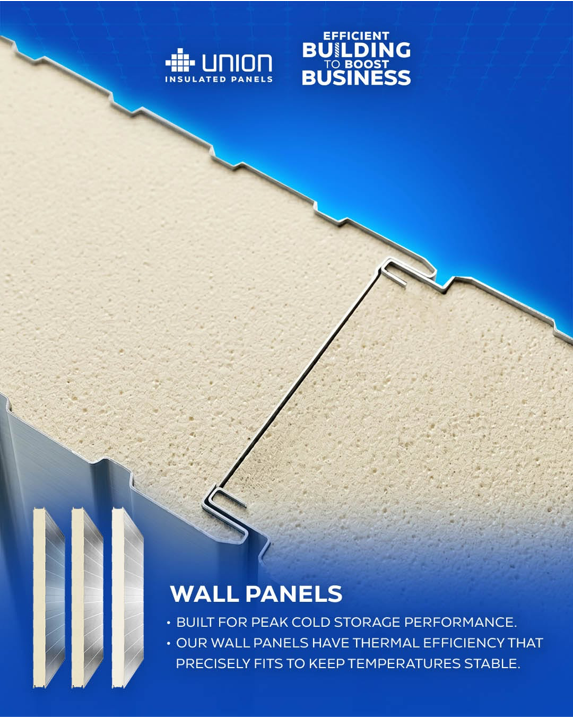
Insulated panels feature a continuous, high-grade insulating core locked tightly between two protective metal faces. This creates an advanced, airtight thermal envelope. By investing in this level of efficiency on day one, you effectively lock in predictable, lower operational costs for decades, shielding your future bottom line from energy market spikes.
2. Eliminating Costly Business Interruptions
For industries like cold storage, food manufacturing, pharmaceuticals, or logistics, a stable indoor environment isn’t just a preference, it’s a strict operational requirement. A single moisture leak or temperature drop can ruin millions in inventory and stop operations entirely.
Traditional multi-part walls have numerous joints and materials that can degrade,
trap moisture, or invite mold over time. This is a vast difference from using insulated panels, which are engineered for extreme durability, water resistance, and better hygiene.
Securing future operations means knowing that a severe storm or a humid summer a decade from now won’t result in structural failure that forces an expensive shutdown.
3. Staying Ahead of Changing Environmental Regulations
Building codes, carbon footprint mandates, and sustainability regulations are tightening year after year. Building to meet just the bare minimum of today’s standards is a significant compliance risk.
If a structure relies on outdated, low-efficiency materials, it risks becoming legally non-compliant—or subject to heavy carbon penalties—in the near future.
Good thing that high-performance insulated panels far exceed standard energy targets, which ensure that your asset remains fully compliant with future environmental legislation, saving you from disruptive and costly retrofits down the road.
4. Built-In Agility for Business Growth
A business is a living organism; it changes, scales, and pivots. A warehouse layout that works perfectly today might need an expansion or a complete structural reconfiguration five years from now.
Since insulated panels are modular, precision-engineered components, they fit together seamlessly. This structural agility means that they can be demounted, expanded, or reconfigured with far less downtime, waste, and labor than traditional setups. So, you aren’t just building for your current scale; you are building room to evolve.
The bottom line is, securing future operations simply means eliminating predictable risks before they have a chance to manifest. Choosing high-performance insulated panels is the architectural equivalent of a premium insurance policy for a company’s daily workflow. It guarantees that the physical asset supporting the business remains cost-effective to run, structurally secure, legally compliant, and completely adaptable for the next generation of growth.
So go on and future-proof your upcoming facilities or projects with Union Insulated Panels today!
continue reading
Related Posts
For commercial and industrial facilities in the Philippines, indoor climate
One faulty seam is all it takes to turn an